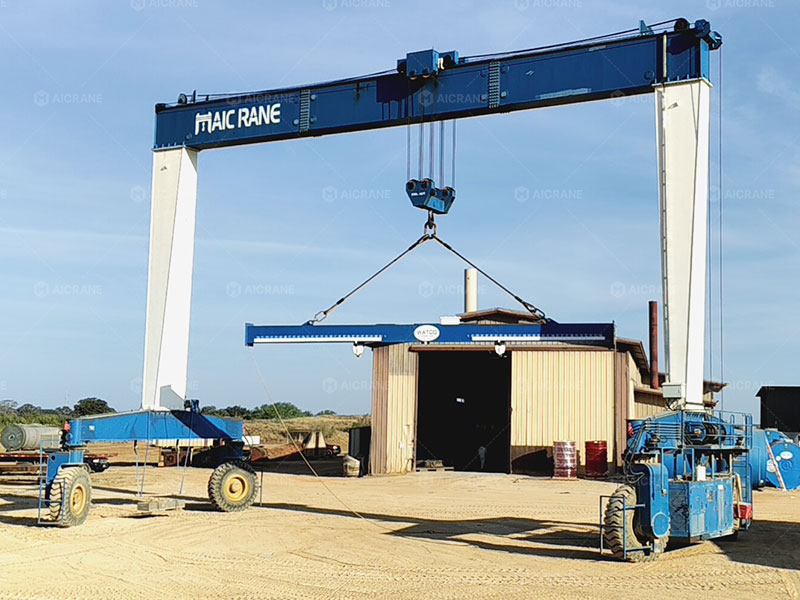
Rubber Tyre Gantry Cranes (RTGs) are a staple in modern ports, container yards, and heavy industrial facilities. Their mobility, versatility, and ability to lift and transport large loads make them indispensable for operations involving containers, heavy equipment, and precast concrete elements. However, the performance and safety of heavy RTG cranes depend not only on their design and lifting mechanisms but also critically on the ground or surface on which they operate. The ground bearing capacity is a fundamental factor that directly influences the operational stability, safety, and lifespan of these cranes. Understanding and adhering to the requirements for ground bearing capacity is essential when planning, installing, or upgrading RTG crane systems.
Understanding Ground Bearing Capacity
Ground bearing capacity, sometimes referred to as soil bearing capacity or pavement load-bearing capacity, is a measure of the maximum load per unit area that the ground can safely support without undergoing excessive settlement, deformation, or failure. For heavy rubber tyre gantry cranes, this capacity must account for the combined weight of the crane structure, the loaded spreader, containers or materials being lifted, and dynamic loads resulting from crane movement.
Unlike stationary overhead cranes, RTGs exert both static and dynamic loads on the ground. Static loads include the weight of the crane on its tires when stationary, while dynamic loads occur when the crane is traveling, braking, or performing lifting operations. This distinction is important because dynamic loads can significantly amplify stress on the ground, sometimes by 1.5 to 2 times the static load depending on crane speed, travel direction, and turning maneuvers. Therefore, the ground must be engineered to handle not only the crane’s rated lifting capacity but also the dynamic stresses produced during routine operation.
Factors Affecting Ground Bearing Capacity Requirements
Several key factors determine the ground bearing requirements for heavy RTGs:
1. Crane Weight and Load Distribution
Heavy RTGs, especially those with lifting capacities of 40 to 120 tons or more, are substantial in weight. The total crane weight includes the gantry structure, tires, hoisting mechanisms, counterweights, and auxiliary systems. Load distribution across the crane tires is critical; uneven distribution can lead to localized overloading, causing pavement failure or tire damage. Typically, engineers calculate the wheel load using the following formula:
This calculation provides the maximum load that each tire will transfer to the ground. For example, a 100 ton gantry crane with 16 tires and a maximum lifted load of 40 tons will impose a wheel load significantly higher than just the crane weight divided by the number of tires, especially when considering dynamic effects during travel or lifting.
2. Ground or Pavement Type
RTGs operate on different types of surfaces, including concrete pads, asphalt, or compacted soil. Each material has its own load-bearing characteristics. Reinforced concrete pavement is often preferred in container yards because it provides a uniform, durable surface capable of handling repeated heavy loads. The pavement design must consider thickness, reinforcement, subgrade quality, and expected traffic frequency. Asphalt surfaces are less ideal for heavy RTGs due to lower stiffness and susceptibility to rutting, although proper thickness and base preparation can make them suitable for moderate loads. Unpaved or weak soil surfaces require significant ground improvement, such as soil stabilization, piling, or geogrid reinforcement, to achieve the necessary bearing capacity.
3. Tire Type and Contact Area
The size, type, and inflation pressure of RTG tires significantly affect ground bearing. Wide, low-pressure tires distribute weight over a larger area, reducing the stress on the ground. Conversely, narrow tires or under-inflated tires concentrate load, increasing the risk of pavement deformation. Modern heavy RTGs often employ solid or pneumatic tires designed to optimize load distribution and minimize ground stress while maintaining mobility.
4. Dynamic and Operational Loads
Dynamic loads arise from starting, stopping, turning, and lifting operations. For example, during acceleration, braking, or cornering, additional lateral and vertical forces act on the tires, sometimes exceeding the static wheel load. Engineers usually apply a dynamic load factor ranging from 1.1 to 1.5 to account for these effects when designing the ground bearing capacity. In some cases, extreme operations, such as lifting a heavy container while the crane is slightly moving or when operating on a slope, may require even higher safety margins.
5. Environmental and Seasonal Effects
Ground conditions are affected by environmental factors such as temperature fluctuations, rainfall, groundwater levels, and freeze-thaw cycles. Excessive moisture can reduce soil strength, leading to settlement or rutting under repeated loads. Therefore, the pavement or subgrade design must consider local climate and drainage conditions. Proper surface drainage, reinforced concrete, and subgrade stabilization are essential to maintain consistent bearing capacity throughout the year.
Engineering Standards and Guidelines
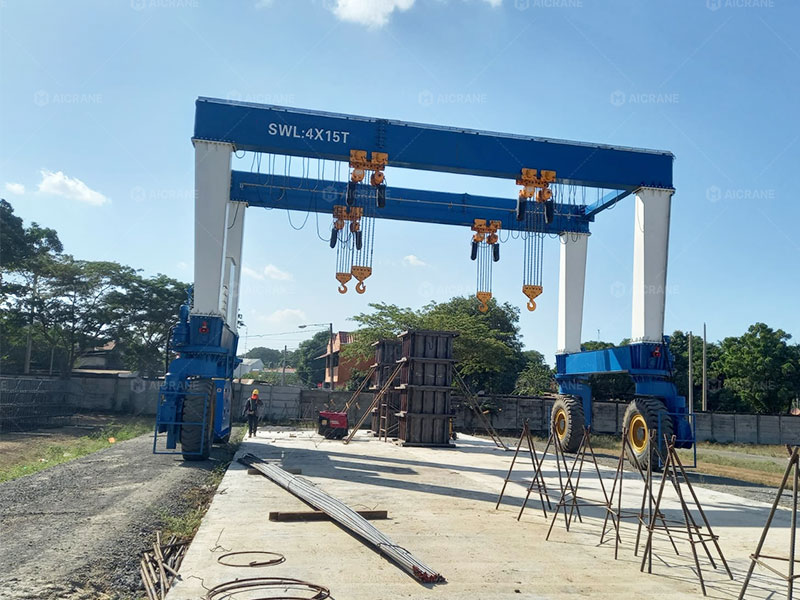
Several international standards and engineering guidelines provide criteria for designing ground surfaces for heavy RTGs. For instance, ISO 5057:2019 outlines general requirements for rubber-tyred container handling cranes, including operational considerations and safety. Other civil and structural engineering standards, such as AASHTO, BS 8110, and Eurocode, provide methods for calculating pavement thickness, subgrade preparation, and load-bearing requirements for heavy equipment.
A common practice in RTG yard design is to calculate the allowable ground bearing pressure using the formula:
This ensures that the ground or pavement will support the maximum load without permanent deformation. Typically, heavy RTGs require an allowable ground bearing pressure ranging from 4 MPa to 12 MPa, depending on crane weight, tire configuration, and operational intensity.
Ground Preparation and Reinforcement Techniques
To meet bearing capacity requirements, several ground preparation strategies are employed:
-
Compacted Subgrade: Soil is compacted to achieve high density and uniformity, reducing the risk of differential settlement.
-
Reinforced Concrete Pavement: High-strength concrete slabs reinforced with steel rebar or mesh distribute loads evenly.
-
Geogrid and Soil Stabilization: Geogrids or soil stabilizers improve weak soil performance, especially in areas with clay or sand subgrades.
-
Drainage Systems: Proper drainage prevents water accumulation, which can weaken the subgrade and reduce bearing capacity.
-
Pile Foundations: In extremely soft soil conditions, piles may be used to transfer loads to deeper, stronger soil layers.
Importance of Regular Inspection and Maintenance
Even with properly designed ground surfaces, regular inspection and maintenance are critical. Cracks, rutting, uneven surfaces, or subsidence can compromise RTG stability and operational safety. Routine maintenance includes:
-
Monitoring pavement condition for wear and deformation.
-
Checking tire condition and inflation to ensure proper load distribution.
-
Ensuring drainage systems are functioning correctly to prevent water accumulation.
-
Periodically re-compacting or resurfacing high-traffic areas.
Conclusion
Ground bearing capacity is a foundational consideration for heavy Rubber Tyre Gantry Cranes. Neglecting this factor can lead to pavement failure, crane instability, operational delays, and, most importantly, safety hazards for personnel and equipment. By understanding the interplay between large mobile gantry crane weight, dynamic loads, tire design, and ground preparation, engineers and operators can ensure safe, efficient, and long-lasting RTG operations. Proper planning, adherence to international standards, and ongoing maintenance form the backbone of successful RTG deployment, safeguarding both productivity and structural integrity in industrial and port environments.