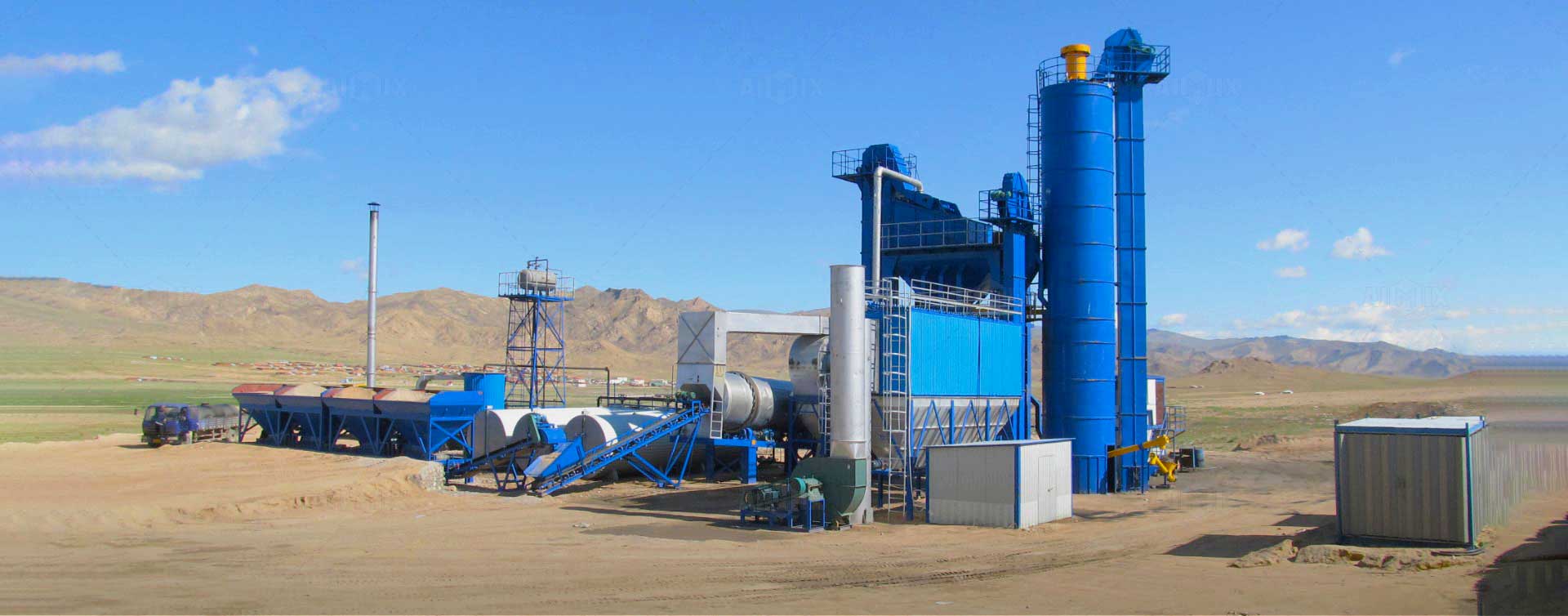
The roads of Latin America are the arteries of its commerce, connecting ports to agricultural heartlands and cities to industrial zones. However, these arteries are under constant strain. From the overloaded ore trucks traversing the passes of the Andes to the relentless container traffic on the approaches to the Panama Canal, heavy-duty traffic demands a road surface that is not just smooth, but exceptionally durable. This durability begins not at the paving site, but in the heart of the operation: the asphalt plant. The performance requirements for an asphalt plant(planta asfalto) serving these high-stress corridors go far beyond basic production. They delve into the realms of precision, consistency, and adaptability. For engineers and contractors across the continent, selecting the right equipment is a critical decision that dictates whether a highway will last its intended lifespan or fail prematurely under the weight of regional commerce.
Precision and Consistency: The Non-Negotiables for Durability
When a road is designed to withstand thousands of heavy axle loads daily, the margin for error in the asphalt mix approaches zero. The primary performance requirement for any asphalt plant serving this market is its ability to produce a perfectly homogeneous mix, batch after batch, day after day. Inconsistencies in the mix lead to weak spots, which quickly become potholes or rutting under heavy trucks. This demand for precision directly impacts the type and configuration of the plant selected for a project.
Advanced Screening and Weighing Systems
To achieve the required consistency, the plant must feature highly accurate screening and weighing systems. The aggregates used in Latin America can vary significantly in gradation, even within the same quarry. A high-performance drum mix asphalt plant(planta asfáltica continua) must be able to sort these materials with extreme precision and then weigh each component—aggregates, bitumen, and filler—to within a fraction of a percent. This level of control is what separates a plant capable of producing mixes for international standard highways from one suited only for low-volume rural roads. Modern control systems that automate these processes are no longer a luxury but a necessity for projects requiring Superpave or Marshall mix designs with tight tolerances.
Matching Plant Type to Project Scale and Mobility Needs
The choice between different types of asphalt plants is heavily influenced by the specific demands of heavy-duty road projects. While stationary, high-capacity plants are often the default choice for major intercity highways, the reality of infrastructure development in Latin America often requires a more nuanced approach. Project locations can be remote, and the duration of work on a specific segment might be limited.
The Role of the Compact and Mobile Solution
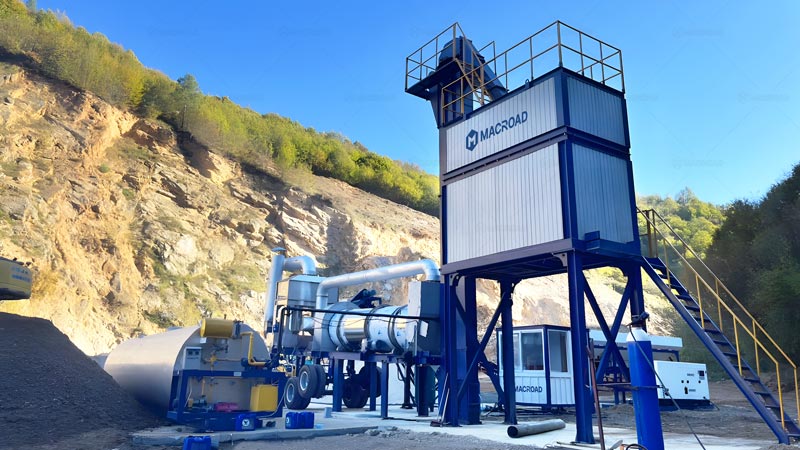
For rehabilitation projects on existing heavy-haul routes or for construction in mountainous regions where space is at a premium, a smaller footprint can be a significant advantage. In such scenarios, a mini asphalt plant(mini planta asfáltica) can be a surprisingly effective tool. While “mini” might suggest limited capability, modern compact plants are engineered to deliver high-quality mix suitable for heavy-duty applications. They offer the precision of larger plants but with the added benefits of lower capital investment and faster setup times. This allows contractors to establish production closer to the job site on a congested highway, drastically reducing truck haul times and the associated costs and safety risks. However, it is crucial to verify that the specific mini asphalt plant model can achieve the necessary production rates (tons per hour) to keep a large paving crew moving efficiently without interruptions.
Continuous Production for High-Volume Projects
When the project involves hundreds of thousands of tons of asphalt for a new multi-lane highway, the efficiency of continuous production becomes paramount. This is where the drum mix asphalt plant comes into its own. Unlike batch plants, which produce mix in discrete batches, a drum mix asphalt plant combines the drying and mixing processes in a single, continuous drum. This design offers superior fuel efficiency and higher throughput, making it the preferred choice for projects where the primary goal is moving large volumes of material quickly. For a heavy-duty traffic road, the quality of the mix from a modern drum mix plant is on par with batch plants, provided it is equipped with advanced features like aggregate cold-feed bin controls and the ability to add recycled asphalt pavement (RAP). The efficiency of a drum mix plant directly translates to construction efficiency, allowing paving crews to work faster and complete sections of road more quickly, minimizing the disruption to existing traffic.
Adaptability to Local Materials and Conditions
One of the greatest challenges in Latin American road construction is the variability of local materials. A plant that performs flawlessly with high-quality crushed stone in one region may struggle with softer, more abrasive aggregates found elsewhere. Therefore, a key performance requirement is the plant’s adaptability. It must be robust enough to handle a wide range of aggregate types and moisture content without compromising on mix quality or production rate.
Case Study: The Demands on an Asphalt Plant in Colombia
The topography and geology of a country like Colombia present a unique set of challenges. When operating an asphalt plant in Colombia(planta de asfalto en Colombia), particularly for the country’s vital mountainous highways, the equipment must contend with high humidity, significant rainfall, and aggregates that can vary widely in hardness and abrasiveness. A plant destined for use in Colombia must have a drying system powerful enough to handle high moisture content efficiently. Furthermore, the liner plates and mixing components must be constructed from wear-resistant materials to withstand the abrasive nature of local stone. The performance requirement here is resilience; the plant must maintain high efficiency and uptime despite punishing materials and environmental conditions. Contractors looking for an asphalt plant in Colombia must prioritize these rugged features over lower-cost, less durable alternatives to avoid costly shutdowns.
Technological Integration for Quality Assurance
Finally, the performance of a modern asphalt plant is inextricably linked to its technology. For heavy-duty traffic roads, quality assurance is not a one-time check but a continuous process. Today’s high-performance plants are equipped with sophisticated control rooms and data logging systems. These systems allow operators to monitor every aspect of production in real-time, from mix temperature to bitumen content. They also generate detailed production reports that can be shared with project engineers and government inspectors to verify that the mix meets all specifications. This digital integration is a performance requirement in itself, as it provides the transparency and accountability necessary for large-scale, publicly funded infrastructure projects. It ensures that the efficiency gained from high production rates does not come at the cost of quality, guaranteeing that the road will stand up to the heavy demands placed upon it for decades to come.